
Top 3 Portuguese wine regions
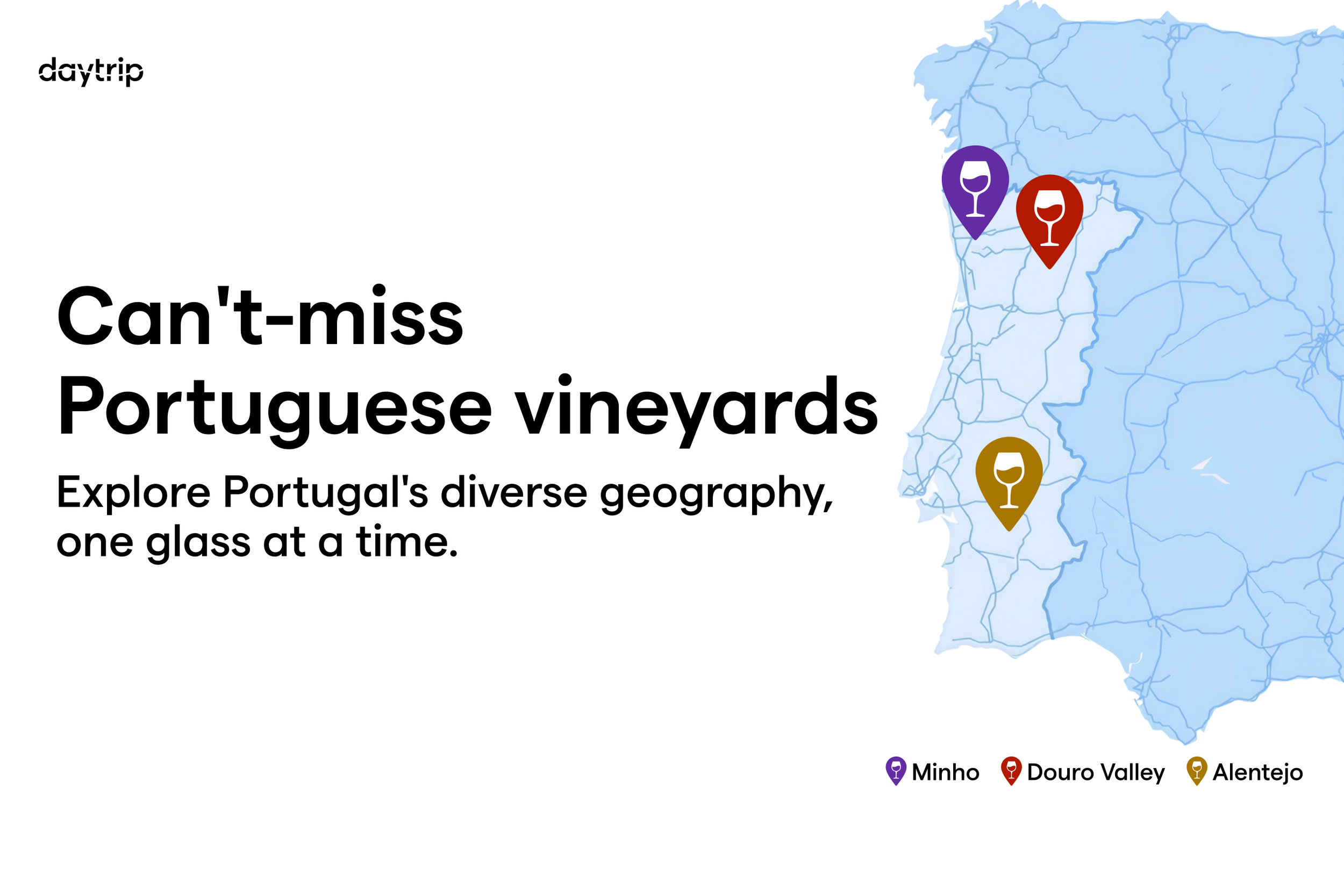
Portugal is globally known for its beautiful landscapes, relaxing atmosphere, and diverse wines. Here, wine lovers can experience the birthplace of Port wine and taste how geography changes a wine’s presence. Read to learn about the top 3 wine regions in Portugal, perfect for aspiring sommeliers or casual sippers alike.
Need to know wine terms:
Quinta: a rural country or wine-producing estate in Portugal
Terroir: environmental factors that influence the character of wine
Vintner: a producer of wine or a winegrower
Geography’s influence
Geographical factors significantly influence the flavor profile of wine. The French term terroir describes what affects the taste and aroma of wine, such as soil, climate, topography, and cultivation techniques. Portugal, bordered by the Atlantic ocean and Spain, is home to many varying climates, which result in interesting and diverse wines. North to South, the country’s geography changes from Alp-like mountains to a dry, Mediterranean climate.
Similar to France, Spain, and Italy, Portugal uses quality wine designations to certify where wines originated. The highest certification for wine in Portugal is DOC, which means Denominação de Origem Controlada (Controlled Destination of Origin). There are 14 DOC throughout the country. When you see a DOC label, you can be assured that the wine is of high quality and adheres to strict regulations.
💡 Day tip: the best time to visit Portugal for wine is early spring or autumn to avoid peak crowds.
Spring welcomes the bursts of color as vineyards come back to life. Autumn is perfect for Portugal’s grape harvest season, which ranges from late August to early October.
Minho
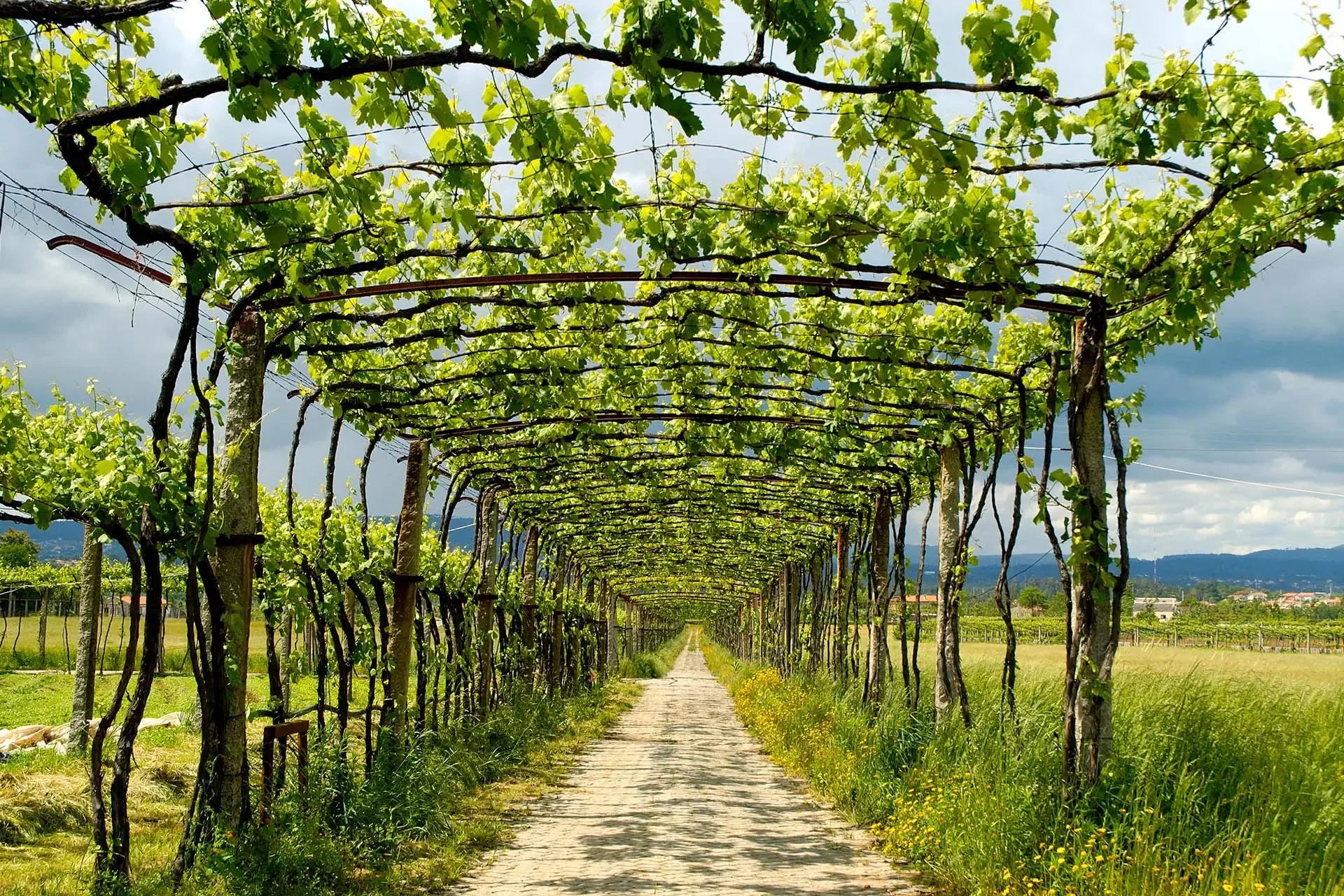
The north is the greenest part of Portugal due to high rainfall and consistent moisture from the Atlantic Ocean. This region produces distinctive Vinho Verde that is known for its high acidity, light carbonation, and lower alcohol content. Vinho Verde translates literally to green wine but it means young wine that is drank shortly after bottling.
The constant exposure to the Atlantic Ocean makes this region cool and wet, which allows grapes to retain high levels of natural acidity and lower sugar content. Damp soil prompted innovation from vintners to grow grape vines high off the ground to prevent rot. In the northwest, the cities of Monção and Melgaço are home to a specific grape variety: Alvarinho. Bordered between the river and mountains, the microclimate of these cities produce this fruity white wine spectacularly. The shielding from wind and rain allows perfect ripening of the Alvarinho grape.
Crisp whites pair well with taking in the vibrant green landscapes. We recommend travelling by car to see spread out family-run quintas that aren’t visible from the main highway. Take a seamless private car transfer with Daytrip from Porto to Monção and add a sightseeing stop in Braga along the way.
Douro Valley
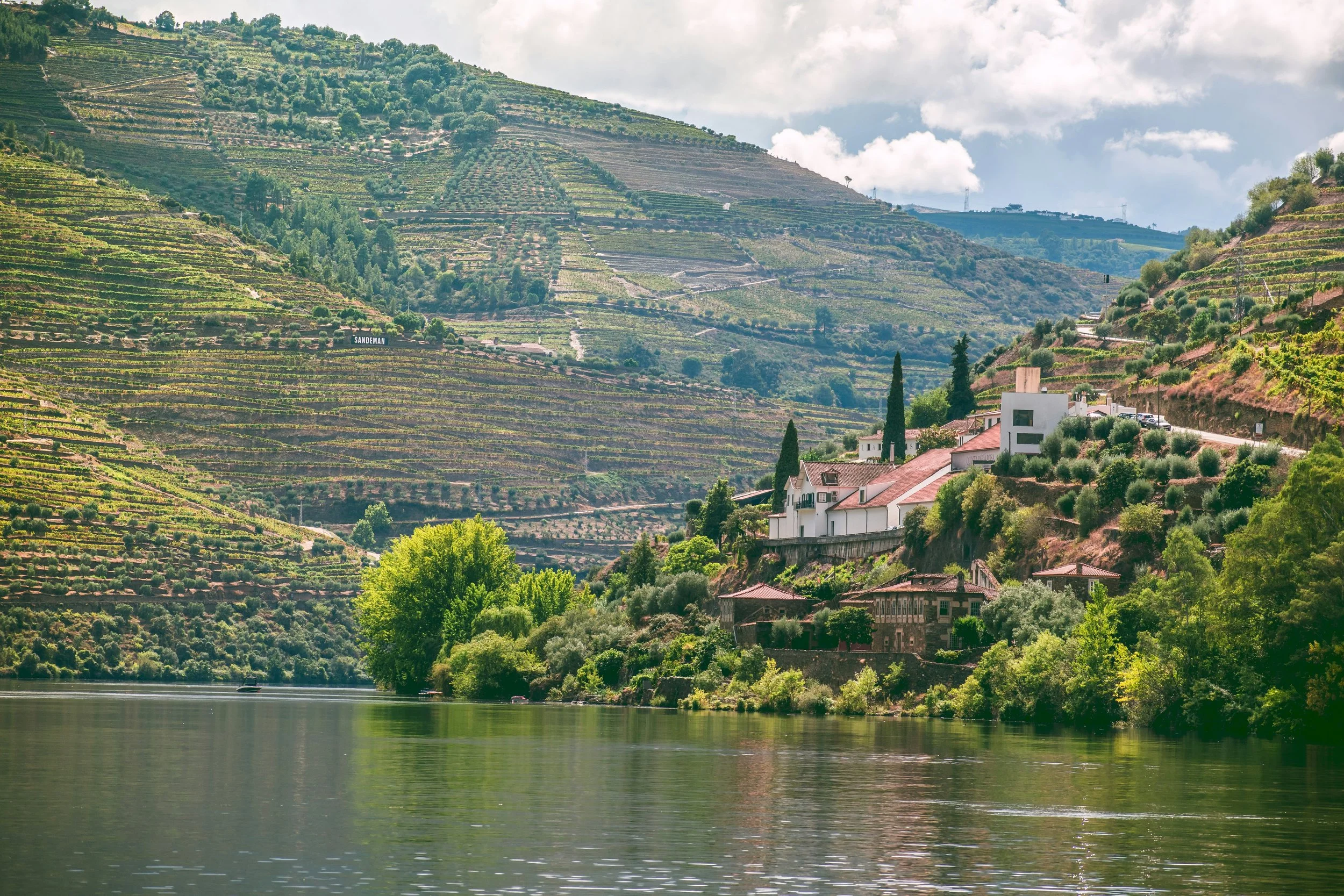
The Douro Valley is the oldest demarcated wine region in the world since 1756. Unlike Minho, the Douro Valley is inland and shielded from the Atlantic by the Marão and Alvão mountains. The steep topography encouraged vintners to carve terraces into the valley for vineyards; the beautiful landscapes are a UNESCO World Heritage Site. These narrow vineyards are not conducive to the use of modern machinery, so grapes are harvested by hand by skilled crews. Then, the valley comes together to crush grapes the traditional way, by foot!
This region is where Port wine was invented. It was first created to preserve Portuguese wine for transportation to England back in the 17th century. In the process, grape brandy is added to stabilize the wine, which stops fermentation, increases alcohol content, and leaves residual sugar. It’s a sweet, fortified wine that can only be produced in the Douro Valley. Port wine is not your standard red wine, it’s often drank with dessert due to its richness.
Book a guided day trip from Porto to Amarante and Pinhão to taste the best of the Douro Valley. The N222 road is one of the most beautiful drives in the world but it’s winding, narrow, and steep. Skip the driving stress so you can focus on the views outside.
Alentejo
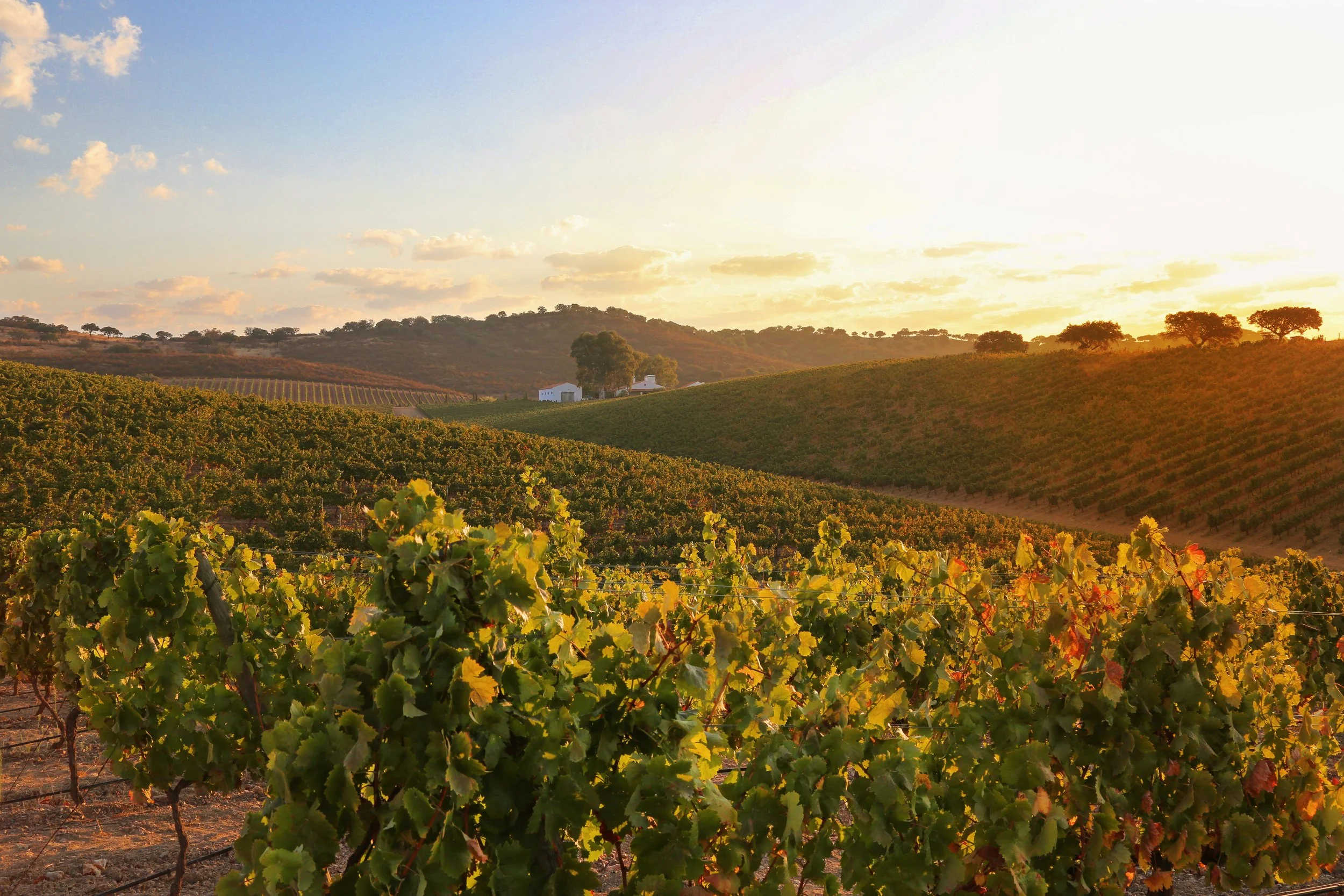
In the South, the Alentejo region’s climate is arid and flat. Alentejo is well known for fruity and bold red wines as a product of endless sun and dry conditions. Intense heat consistently ripens grapes to full maturity with low acidity and high sugar levels, which turn into full-bodied red wines with high alcohol content. Unlike the Douro Valley, this region’s sprawling vineyards allow for the use of modern harvesting machinery that produce high-quality wine at low prices.
While this region is sparsely populated, it produces another essential in the process of wine — cork! Cork wine stoppers are made from the bark of cork oak trees, which is harvested every 9-12 years and is a sustainable farming practice. Cork is the ideal material to seal wine bottles, as it expands, is resistant to liquid, and porous. This keeps oxygen out but lets the wine breathe and age properly.
The capitol of the Alentejo region is Évora, which is an hour drive from Portugal’s capital, Lisbon. Évora is full of diverse architecture and Roman history and is a gateway to this region. Get the best Alentejo experience by driving through the world’s largest cork oak forests to wineries that are a bit more distanced.
Are you a Travel Agent looking to book Daytrip for your clients?
Join the Daytrip Travel Agent community to earn commission or access exclusive discounts! Sign up here.